What I’m focusing on, learning, and keeping simple this season
It’s officially time to start planning for the garden 🌱
Last year (2025), gardening didn’t happen for us. Between multiple rounds of the flu and strep, plus a cross-country trip in early summer, time completely got away from me. By the time things settled down, it was mid-summer, and it was too late to start the garden.
I’m trying to be more intentional about getting the garden started this year. I’m planning earlier, mapping out the garden rhythm, and including the kids more. I want to try and have fun with it! I’m excited to try new things with the kids and learn as we go.
My 2026 Gardening Plan (Rough Draft)
- January: Plan the garden.
- February – May: Grow plants indoors with some direct sowing.
- March – April: Prep garden beds, ground, and drip line system
- May: Direct sow seeds and transplant outdoors
- June – October: Hopefully enjoy a good harvest.
I’m currently planning the garden, and it’s been fun since the kids want to help this year. I’m hoping their enthusiasm sticks, especially when it’s time to clear the garden area of all the weeds!
How I’m Planning the Garden This Year
As a beginner, I’m keeping things simple and focusing on these steps in the planning process:
- Choosing what to plant
- Creating a planting calendar
- Deciding on different planting methods
- Setting a realistic garden budget
Choosing What to Plant
When considering what to plant, it’s a good idea to know which planting zone you’re in. If you are in the United States, you can find your planting zone using this USDA Planting Zone Map: US Planting Zone Map – Growing Zones In The United States | Gardening Know How. Knowing your zone helps you choose plants that are more likely to grow in your area, increasing your chances of a successful garden.
I garden in Zone 6b. This gives me a general idea of our frost dates and what types of plants tend to grow well in our area.
The first year that we had a garden was in 2024. I had absolutely no experience gardening and no real plan for what to grow or how to grow it. That year, I mainly bought starts from a local grower and had no real plan for what to grow or how to grow them!
We had great success with watermelon and tomatoes. Other than that, almost everything else failed to grow.

My kids said this was the best watermelon that they’ve ever eaten! That’s success in my book 😊
This year, I want to be more strategic about the garden approach. I want to be more intentional and plan better. I plan to start more of our plants indoors. Partly to get the kids involved in the whole process, and it’s also a new thing for all of us to learn together. There’s going to be a lot of “firsts” for us this year.
My goal is to grow only things we will actually eat! Well, my youngest is a very picky eater. I’m hoping that growing the food will encourage trying new things…. We’ll see! The kids and I went through our seeds. We also went through the list of other plants in case anything was missing that we wanted to get.
Here’s where we landed for items we already had and decided on these seeds:
Vegetables and Fruit:
- Spinach
- Lettuce
- Brussels Sprouts
- Carrots
- Tomatoes
- Onions
- Beans
- Cucumbers
- Pumpkin
- Watermelon
Flowers and Herbs:
- Lavender
- Zinnia
- Catnip

For items we didn’t have on hand, I placed an order through Gurney’s Seed & Nursery. It’s my first time purchasing plants from a larger nursery. In the past, we’ve bought all our plants locally.
This year’s purchases (so far) included:
- Strawberries
- Seed potatoes
As a beginner gardener in Zone 6b, I’m focusing on learning what grows well in our area while keeping the garden manageable.
Creating a Planting Calendar
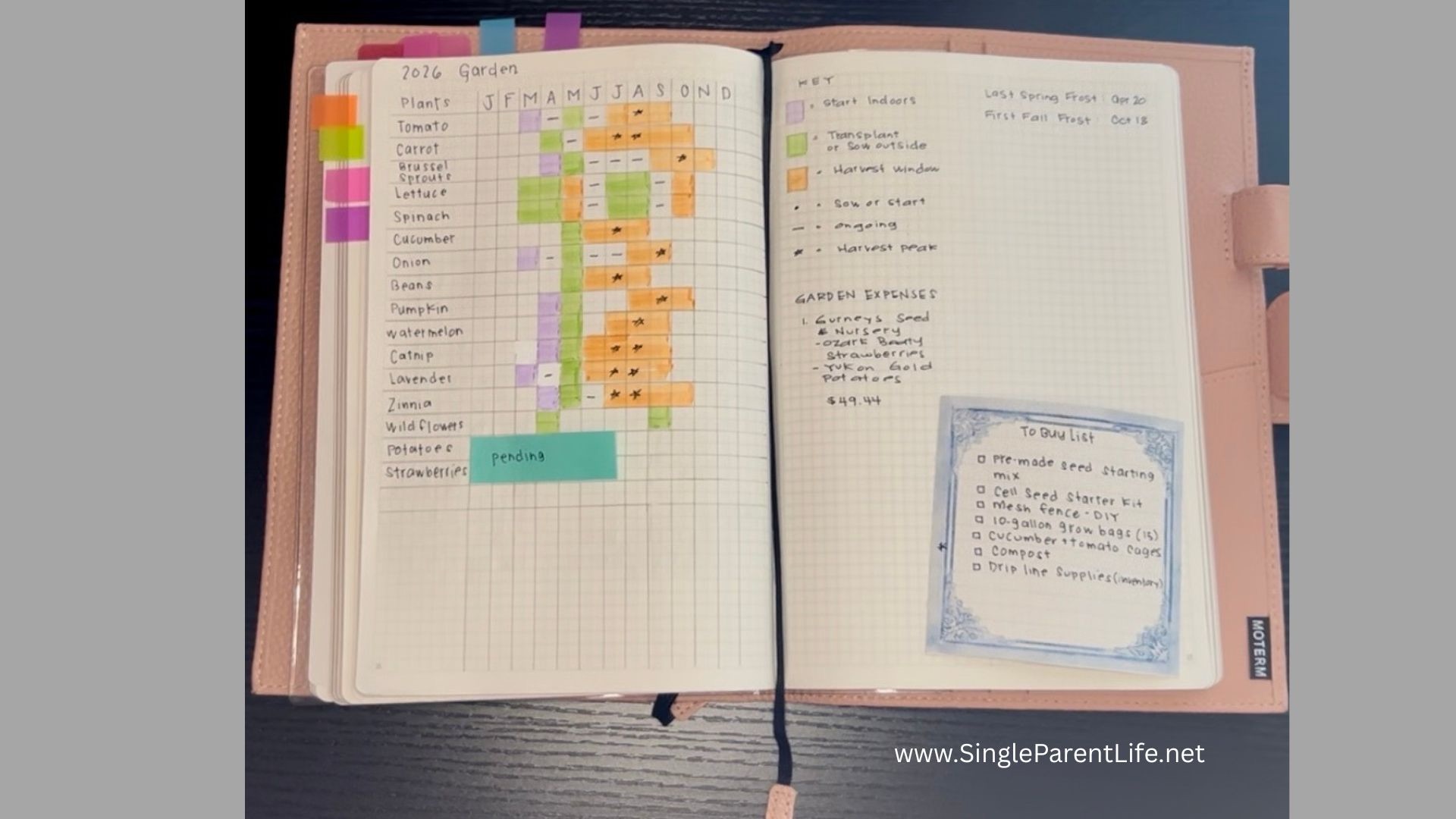
Because we plan to start some seeds indoors and because I want to improve both timing and harvesting, I decided to create a planting calendar for this year. In 2024, I’ll be honest, I mostly winged it. I didn’t have a system for tracking when and how things performed throughout the season.
This year, I wanted a one-page planting calendar to view the entire planting season at a glance.
To build out the calendar, I went through each seed packet and read the planting directions. I also used ChatGPT as a planning tool to help map things out and double-check my plan.
Because I am in Zone 6b, local gardeners often recommend not planting outdoors until after Mother’s Day. Sometimes we get a late freeze in May. With that in mind, I don’t plan to transplant seedlings outside until Mother’s Day weekend.

Another goal of using a planting calendar is to evaluate its accuracy and identify what I can improve in next year’s garden. As a beginner gardener, creating a planting calendar has helped me feel better prepared as I head into the growing season.
Deciding on Different Planting Methods
This year, we’re experimenting with a few different planting methods instead of relying on just one approach. As a beginner gardener, this season will definitely be a learning experience for us.
Here are the different methods we are planning to plant this year:
- Direct sow on the ground
- Raised beds
- Grow bags
Raised Beds
Because our soil varies around our property, raised beds were the quickest way to get started. The ground is rocky in some parts and then clay-like in others. When we had our first garden in 2024, I invested in raised beds and purchased three from Vego Gardens:
- One 8×4
- Two 6×2
These raised beds will be used for most of our vegetables and flowers this year, especially the plants that benefit from more controlled soil conditions.
Plants planned for the raised beds:
- Tomato
- Brussels Sprouts
- Beans
- Strawberries
- Lettuce
- Spinach
- Lavender
- Zinnia
- Catnip
To help with layout and spacing, I use the Planter App to map out my raised beds. I really like the Planter App because it notifies me if certain plants don’t go together. It also provides helpful information on common pests, planting dates, and estimated harvest times. I have found this very helpful as a beginner gardener.

Direct Sow on the Ground
Because I’m new to gardening, I didn’t want to tackle preparing the ground and all the work that goes with it. This year, though, we are expanding a bit and planning to grow some plants directly on the ground using planting mounts. I’ve never done this before, so this will be new territory for us.
Items we plan to grow on the ground:
- Watermelon
- Pumpkin
Why mounts?
When we grew watermelon in 2024, it quickly took over our 6×2 raised beds. Watermelon vines spread everywhere, and they need room to grow. The kids are also excited to try growing pumpkins this year, which grow similarly.
So, I’m going to try this mounting method to give the plants room to grow on the ground and provide the vines with plenty of space. This will help keep the raised beds available for other vegetables. This is a bit of an experiment for us, as we continue to learn.
One challenge we’ll need to address is wildlife. We have deer in the area, so I will also need to put up some fencing. This is a work in progress, and I still need to work out what this looks like.
Grow Bags
Grow bags are another new method we are trying this year. We don’t have enough room on the raised beds for all the plants we want to grow. Right now, I don’t have the budget to purchase additional raised beds, so I decided to try grow bags this year.
Plants we will grow in the grow bags:
- Potatoes
- Onions
- Carrots
- Cucumbers
Overall, we’re growing more this year than we did in 2024, but we’re also trying these multiple planting methods at the same time. It’s going to be a learning curve for us, and it’s exciting to learn what works.
Garden Budget
When I started planning the garden this year, I realized I had forgotten to set up a sinking fund in my YNAB budget! I admit this was a big oversight on my part.
I’m also still figuring out how much we realistically need to budget. I want to be budget-conscious, but I also realize that gardening will require some investment, especially as a beginner, and that I’ll be trying new things.
Here are the main categories I know I’ll need to budget for this year:
- Drip line and irrigation supplies.
- Soil, compost, and mulch.
- Seeds and indoor growing supplies (seed starting mix).
- Fencing and deterrents for wildlife.
- 10-gallon grow bags.
- Trellis or cages.
The list is a starting point, and I expect it will grow as the season progresses. Right now, I’m going to try to stay between $500 and $800. To make this possible, I’ve moved funds from other budget categories to cover the initial costs and set up a sinking fund for the garden. After this season, I’m planning to adjust my sinking fund to cover the garden costs for next year.
My goal is to be intentional with spending this year.
Prepared, Not Perfect
This year’s garden doesn’t need to be perfect; it just needs to be manageable for our family. I’m keeping our garden budget realistic and flexible as I figure out what we need and what we don’t. Also, what ends up working and not working.
As a beginner gardener, I will be learning as I go instead of trying to get everything right the first time. This year, we will be experimenting, involving the kids, and figuring out what actually works for our space, our schedule, and our budget.
Will everything grow the way we hope? Will we have a successful harvest?
Time will tell. This season is about learning, experimenting, and involving the kids.
Stay tuned as we see what grows this year.
👉 What are you growing this season?
👉 Any beginner gardening tips you’d share with someone just getting started?
Leave a Reply